
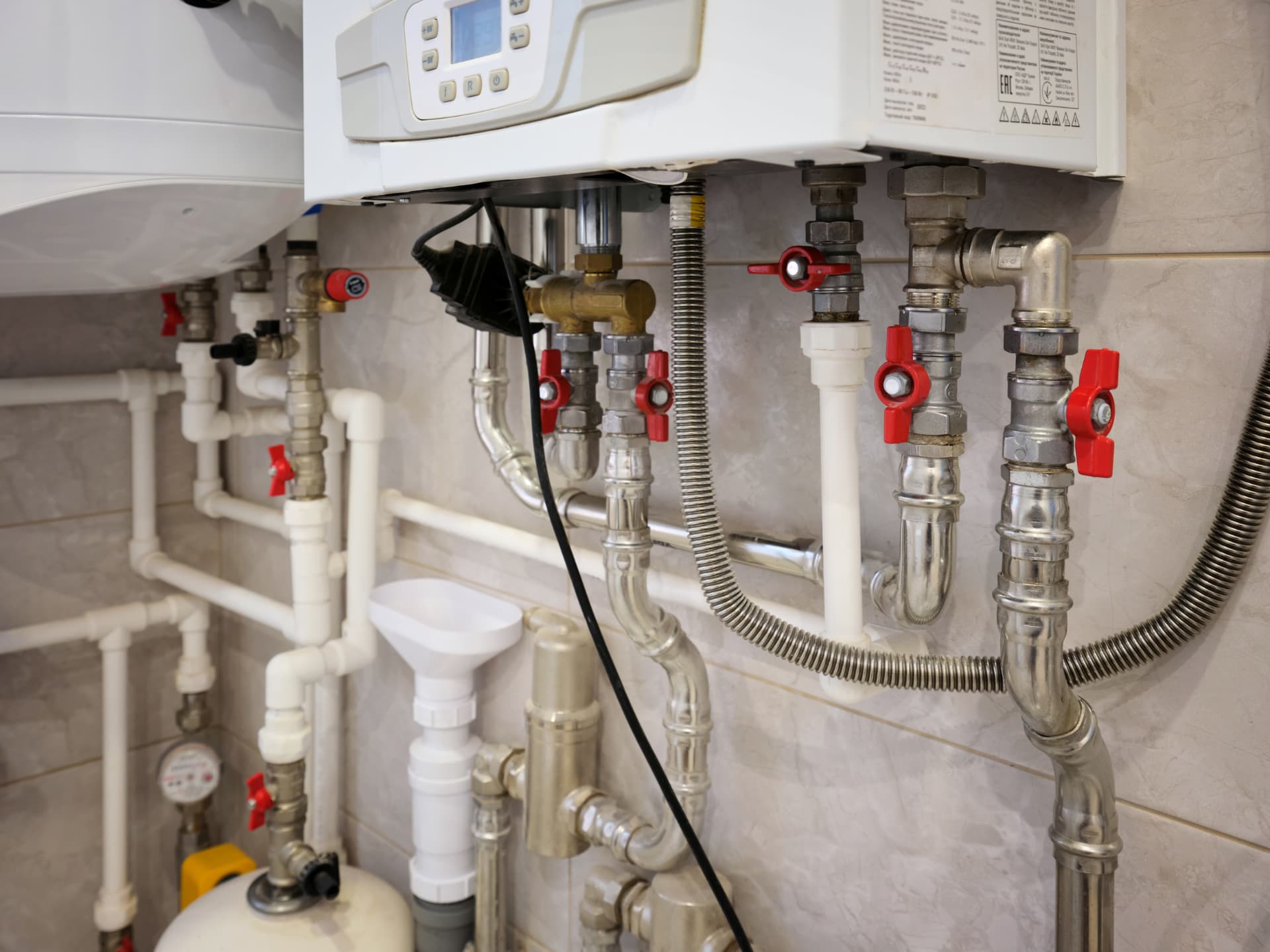
HIU Installation
& Repair
in London & Essex
When a flat on communal heating loses heat or hot water, the problem is not always inside the home. Start with your HIU details and the building's service arrangements so assessment focuses on the right equipment and the right responsibility.
Since 2012
Established local firm
7am – 6pm
Mon–Sat · Closed Sundays
Checkatrade
Read our profile and reviews
What the service involves
A heat interface unit, usually called an HIU, transfers heat from a shared heat network to a home's heating and hot-water circuits. The central heat source is elsewhere in the building or network; the HIU is not necessarily a domestic boiler and may not burn gas inside the flat. Its components and controls depend on the building design, so fault assessment needs the specific unit and network arrangements rather than a generic boiler checklist.
Installation and repair enquiries can come from residents, landlords and managing agents. Before arranging work, establish who owns or maintains the HIU and whether the building has an appointed contractor or approval process. Lease and service agreements may set boundaries around resident-side and network-side equipment. Having access to a cupboard does not establish authority to isolate communal supplies or replace components connected to the wider network.
Tell us whether only your flat is affected, whether neighbouring residents report the same problem and whether the building operator has reported an outage. Provide the unit make, model and symptoms if accessible. A local heating or hot-water fault can resemble a network supply issue. Coordinating information before work helps avoid paying for a resident-side repair when the cause lies in shared plant or the network operator's responsibilities. Keep copies of any building outage notices and earlier repair findings. These can help establish whether the current problem is new, recurring or already being investigated elsewhere, and prevent important context being lost when residents, landlords and service teams communicate separately.
Problems worth addressing before they escalate
Replacing parts will not resolve a network outage
If several homes lose heat at once, the issue may be outside an individual HIU. Ask the managing agent or heat supplier about reported outages before arranging isolated repairs. A unit should not be condemned simply because hot water is unavailable during a wider interruption. The pattern of affected properties is useful evidence for deciding where investigation should begin.
Unauthorised isolation can affect other residents
Shared heating arrangements have operational boundaries that may not be obvious from the cupboard. Do not adjust network valves or dismantle equipment to investigate a fault. Incorrect intervention can affect safety, supply or building service arrangements. Confirm permissions and responsible parties before any work requiring isolation, particularly in occupied buildings with multiple households.
Small leaks or unstable temperatures need assessment
A leak or fluctuating outlet temperature can have several possible causes and should not be diagnosed remotely from one symptom. Report when it happens and whether heating is also affected. Keep clear of very hot pipework and wet electrical components. Continuing to use a visibly damaged unit without appropriate advice can allow a local problem to worsen.
From enquiry to completion
Confirm the building arrangements
Provide your postcode, building name, unit details and the role of the person making the enquiry. Check whether the managing agent or heat supplier needs to authorise work. Include any known outage information and whether neighbouring flats have similar symptoms. This helps establish the correct starting point before an appointment is discussed.
Assess the unit and reported supply
Assessment should distinguish the HIU's heating and hot-water functions from the communal supply. Controls, accessible components and the fault pattern can guide investigation. Where network measurements or isolation are required, coordination with the responsible operator may be necessary. The scope must respect the building's service arrangements.
Agree a bounded repair or replacement scope
Ask which work is within the HIU, which lies on the resident side and which needs network-operator involvement. A proposal should identify equipment compatibility, required permissions, isolation and access. Parts availability and manufacturer support matter, especially where an older unit may be replaced rather than repaired.
Coordinate access and carry out agreed work
The work sequence can depend on communal shutdown windows, access permissions and the needs of occupants. Discuss expected heating or hot-water interruption and any building notices. Do not assume a contractor can change network settings or shared plant simply because the individual unit is being repaired or replaced.
Verify performance and explain responsibilities
Appropriate checks should establish the unit's operation within the available supply conditions. Ask for findings, user-control guidance and any remaining issues requiring the managing agent's attention. Keep records of work and product information, and clarify future servicing responsibility. A successful local test is not a guarantee of uninterrupted network supply.
What a considered approach gives you
A clearer fault boundary
Understanding whether a problem belongs to the HIU, apartment circuit or shared supply makes the proposed next step more relevant. It also helps residents communicate useful information to a managing agent rather than treating every loss of hot water as proof of a failed unit.
Better coordination with the building
Confirming approvals, isolation and access before work reduces uncertainty for residents and managers. It helps align a repair with the building's operating arrangements and prevents the enquiry from assuming authority over communal equipment that the resident may not control.
Equipment compatibility considered
Replacement needs to suit the connected network and dwelling requirements. Assessing these together gives you a basis for questioning a proposed unit and its controls. A physically similar cabinet is not proof that a replacement has the right hydraulic or operational characteristics.
Useful information after the visit
A clear record separates completed HIU work from recommendations for the apartment or network. This supports future maintenance and makes unresolved responsibilities easier to follow up. Written findings are more useful than a general assurance that everything in the building's heating system has been covered.
Equipment, methods and property considerations
Heating and domestic hot-water functions
HIUs vary in how they provide heating and hot water. Heat exchangers can transfer heat while separating circuits, and controls regulate the unit's response to demand. A fault can affect one function or both. Tell the assessor whether radiators warm up, whether hot water is stable and what the controller shows. Avoid assuming a particular valve or exchanger is responsible without testing the actual unit and checking relevant supply conditions.
Controls, strainers and internal components
Depending on design, an HIU can include heat exchangers, control valves, sensors, strainers, pumps and other components. The appropriate servicing and repair method depends on the manufacturer and building arrangement. Deposits or restrictions are possible issues, but blanket cleaning or parts replacement is not a diagnosis. Ask which findings support the recommended work, what components are included and whether replacement parts are suitable for the model and network conditions.
Network-side and apartment-side responsibilities
The heat supplier, landlord, managing agent and resident can have different responsibilities for plant, distribution, HIUs and domestic circuits. Check the lease, service agreement and supplier information instead of assuming one standard division. Building-level balancing, supply temperature and pressure may be outside an individual repair scope. If other flats share the symptoms, record that information and involve the responsible operator before treating the issue as a private apartment fault.
Replacement, commissioning and commercial buildings
Replacing an HIU requires assessment of network compatibility, available supply, heating and hot-water demand, space and controls. Metering arrangements and access may also need coordination. Larger managed buildings or commercial premises can require specialist site procedures and a broader scope than a residential visit. Confirm project responsibilities and documentation at the outset. No claim is made here that an HIU appointment includes repair or commissioning of the shared central plant.
Further technical and safety guidance
Questions before you book
What does HIU repair in London or Essex cost?
Cost depends on the unit, fault, parts and required access or isolation arrangements. A local symptom may originate on the network, so diagnosis matters before agreeing a repair. Ask what the assessment covers and which tasks need managing-agent or heat-supplier authorisation rather than assuming an all-inclusive price.
How long does an HIU repair or replacement take?
Timing depends on diagnosis, compatible parts, permissions and any communal shutdown window. Some investigations need coordination with the building operator. Ask about likely stages and interruption to heating or hot water. Neither a fixed appointment duration nor first-visit completion can be guaranteed from the symptoms alone.
Is my HIU the same as a gas boiler?
Not necessarily. An HIU usually transfers heat from a communal heat network rather than producing it by burning gas in the flat. The unit and service requirements depend on the system design. Gas-boiler advice should not automatically be applied to shared heating equipment.
Should I contact my managing agent first?
Yes, check the service arrangements and any required permissions, particularly where the building has an appointed contractor or multiple flats are affected. Establish who is responsible for the HIU and network-side work. We need that information to discuss an appropriately bounded enquiry rather than assume authority over communal equipment.
Why is hot water affected but heating still works?
The functions can use different components and control paths, so one may fail while the other remains available. The pattern is useful evidence but not a diagnosis. Report when the problem occurs, temperature behaviour and controller information so the unit can be assessed in context.
How often should an HIU be serviced?
Follow the manufacturer's guidance and the building's maintenance agreement. HIUs vary, and one universal interval is not specified here. Ask who is responsible for scheduling and records, what the service includes and whether network-side maintenance is handled separately by the heat supplier or managing agent.
What lifespan or guarantee applies to a replacement HIU?
Product life depends on design, operating conditions and maintenance. Manufacturer warranties and separate workmanship terms vary, so obtain the actual documents for the proposed unit. No general guaranteed lifespan is stated. Also distinguish product cover from the heat supplier's responsibility for continuity of network supply.
Do you provide emergency HIU repairs outside opening hours?
Our stated hours are Monday to Saturday, 7am–6pm; Sundays are closed and attendance is subject to availability. For an outage, use the building's heat-supplier or managing-agent contact arrangements. If there is an immediate safety hazard, keep clear and obtain appropriate emergency help rather than awaiting a routine appointment.
Get a clear route through an HIU fault
Send the unit details, symptoms and building-management arrangements. Request a free estimate with the right information about access, supply and responsibility.
Established 2012 · Monday to Saturday, 7am – 6pm (closed Sundays)