
Heat Pump Installation
in London & Essex
Plan a new heating system around your home, not a guess about appliance size. Start with the property, current heat source, hot-water needs and the outcome you want from an air source heat pump installation.
Since 2012
Established local firm
7am – 6pm
Mon–Sat · Closed Sundays
Checkatrade
Read our profile and reviews
What the service involves
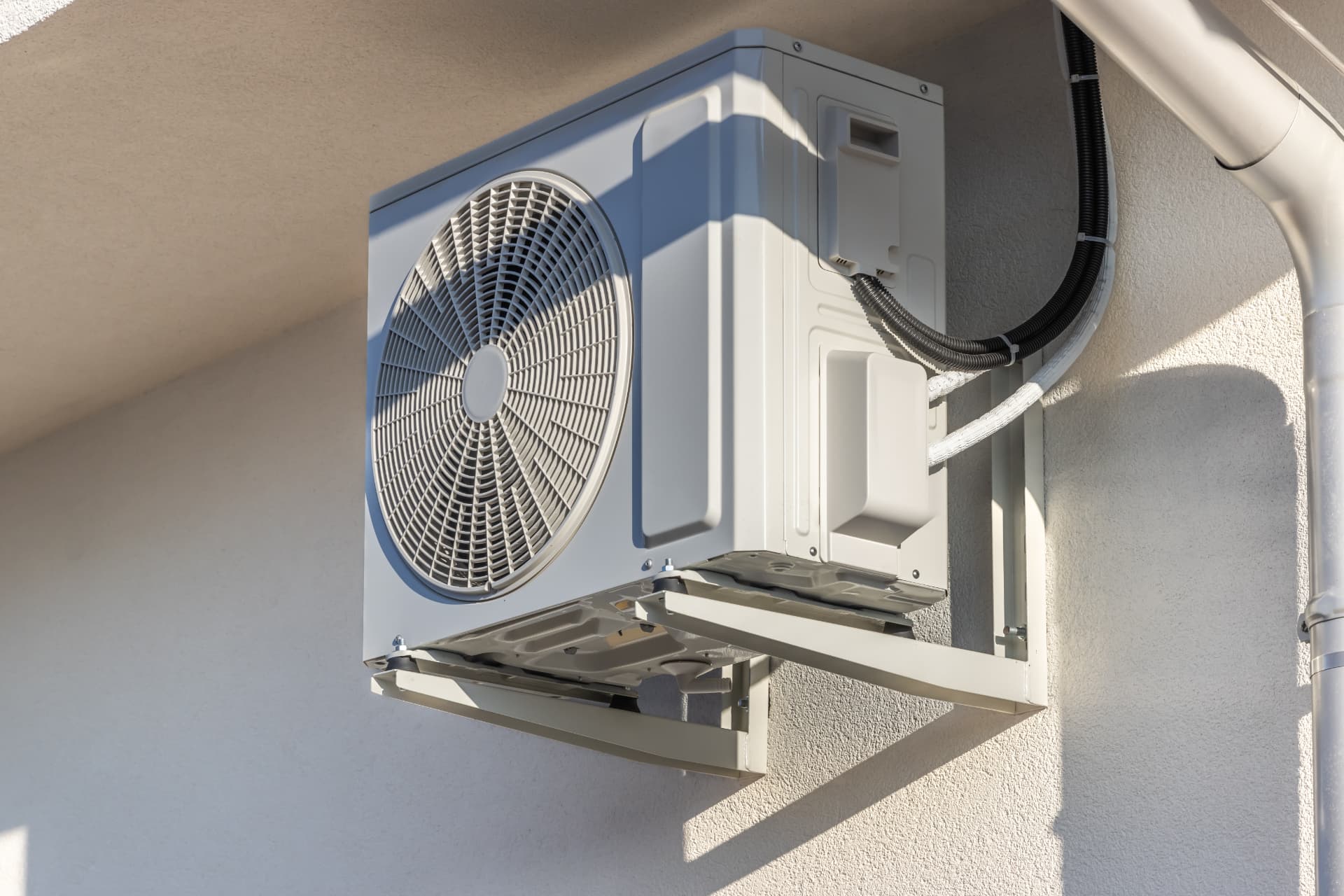
An air-to-water heat pump takes heat from outdoor air and transfers it into water used by the heating system. Depending on its design, it can serve radiators, underfloor heating and a hot-water cylinder. Unlike a gas boiler, it does not create heat by burning fuel in your home. The outdoor unit is only one part of the installation: emitter sizing, water circulation, controls and hot-water arrangements all influence comfort and energy use.
Installation may suit homeowners replacing an ageing heating system, renovating a property or exploring a lower-carbon alternative to gas. Suitability is property-specific. A terrace in Walthamstow and a detached home in Chelmsford can have very different heat demands, outdoor space and cylinder arrangements. You do not automatically need to replace every radiator, but neither should a quote assume existing emitters will perform adequately without checking them.
When replacing an existing heat pump, distinguish a planned upgrade from an unresolved fault. Keep the original model, commissioning records and a description of how the current system performs. An installation assessment should consider whether distribution, controls or building heat loss contributed to poor comfort before selecting new equipment. If you need maintenance or fault assessment rather than a new system, use the separate Heat Pump Servicing & Repair service. Replacing an outdoor unit alone may not address a design or circulation problem elsewhere in the home.
Problems worth addressing before they escalate
Poor comfort can be a system issue
Rooms that remain cold while the heat pump runs may point to several possible causes, including insufficient emitter output, unsuitable control settings or restricted flow. Repeatedly raising the target temperature without understanding the cause may increase energy use without resolving the underlying limitation. Recording which rooms struggle and under what outdoor conditions gives an assessor more useful evidence than a single electricity bill.
Do not treat every alarm as the same fault
An error message is a starting point, not a diagnosis. Repeated resets can conceal the sequence leading to a fault and should not replace the manufacturer's guidance. Keep a note of codes and take photographs of the controller. Do not open electrical compartments or work on refrigerant circuits; the qualifications needed depend on the equipment and task.
Avoid an appliance-only quote
A cheap-looking unit price may exclude a cylinder, emitter changes, electrical work, controls or commissioning. Compare the proposed system and exclusions rather than the outdoor unit alone. Positioning also matters: access for maintenance, airflow, noise assessment and relevant planning requirements should be considered before an installation is agreed, particularly where homes share narrow outdoor spaces.
From enquiry to completion
Describe the property and existing system
Send your postcode, current heat source, property type and approximate room count. Explain whether the enquiry concerns a new installation or an existing fault. Photographs of the outdoor location, controller and current heating equipment help establish what needs closer assessment, without requiring you to remove covers or touch internal parts.
Assess heat demand and practical constraints
For an installation, the assessment should consider room-by-room heat loss, emitters, pipework, hot-water use, cylinder space and outdoor siting. For a repair, the focus is the reported symptoms, error history and equipment condition. Access and any landlord or building-management permissions should be identified before a scope is finalised.
Agree the work and its boundaries
Ask for a written explanation of proposed equipment, required changes, installation responsibilities and exclusions. Where grant support is being considered, confirm the scheme rules and installer certification separately. Do not treat an estimate as approval for a grant, permission to install, or a guaranteed forecast of future electricity costs.
Installation or targeted repair
The agreed work should address the complete heating arrangement or identified fault, rather than replacing components speculatively. Specialist electrical or refrigerant tasks must be allocated to appropriately qualified people. The work sequence and any interruption to heating or hot water depend on the property and should be discussed before the appointment.
Test, explain and plan maintenance
Commissioning or repair verification should check operation under appropriate conditions and record settings relevant to the system. Ask how to use the controller, what maintenance the manufacturer requires and who to contact if an issue returns. Product warranties and any workmanship terms need written confirmation; they are not assumed from the word installation.
What a considered approach gives you
A system matched to the building
Heat-loss assessment and emitter checks help turn a desired room temperature into a realistic system design. This gives you a basis for comparing proposals and understanding necessary changes, instead of relying only on the capacity shown on an outdoor unit's label.
More informed running-cost decisions
A clear proposal identifies assumptions about heat demand, operating temperatures, tariffs and household use. Those assumptions make estimated costs easier to question. Actual savings are not guaranteed and depend on how the completed system is designed, controlled and used.
A focused route through faults
Describing symptoms, codes and recent changes helps distinguish appliance repairs from circulation or control issues. That reduces the risk of paying for an unrelated component or overlooking a problem outside the outdoor unit. Inspection still determines the suitable remedy.
Usable handover information
Understanding heating schedules, hot-water settings and maintenance access makes ownership less uncertain. Written equipment details and service requirements also help you organise future care and assess warranty conditions, rather than treating the installation day as the end of the decision.
Equipment, methods and property considerations
Monobloc and split arrangements
Air source systems may use different configurations. In a monobloc arrangement, the refrigerant circuit is generally within the outdoor unit; a split arrangement connects indoor and outdoor refrigerant equipment. The choice affects pipe routes, siting and specialist work. Neither configuration is automatically the best choice for every home. Ask why a proposed arrangement suits your property and how frost protection, maintenance access and manufacturer requirements will be addressed.
Radiators, underfloor heating and water temperature
Heat pumps are often designed to provide steady heat at lower water temperatures than conventional boiler arrangements. Radiator output changes with water temperature, so the room's heat demand must be considered alongside emitter size. Underfloor heating may be compatible but still needs appropriate design and control. Existing pipework, flow rates and zoning require assessment; changing the heat source alone does not prove the distribution system is suitable.
Hot water and household demand
A hot-water cylinder may be needed, particularly when replacing a combi boiler without stored hot water. Cylinder location, capacity and suitability should be considered alongside the number of occupants and patterns of use. Ask how hot water is produced, controlled and maintained in the proposed design. A specification needs to address showers and baths as well as space heating, rather than leaving household hot-water demand as an afterthought.
Grants, permissions and specialist qualifications
The Boiler Upgrade Scheme operates in England and Wales under current eligibility rules and uses an MCS-certified installer application process. Availability is not a promise that your property or chosen installation qualifies, and R1's MCS status is not asserted here. Verify grant arrangements before relying on them financially. Planning, electrical and refrigerant requirements also depend on the installation; Gas Safe registration for gas work does not establish heat-pump or refrigerant qualifications.
Further technical and safety guidance
Questions before you book
How much does a heat pump installation in London or Essex cost?
The price depends on heat demand, the equipment, cylinder arrangements, emitter changes, electrical work and the practical installation route. There is no reliable single price for every home. Request a property-specific estimate and ask which surveys, alterations, commissioning and disposal items are included before comparing offers.
How long will an installation take?
Timing depends on the amount of heating-system adaptation and any supporting work. A replacement heat source with suitable existing emitters is a different project from a wider renovation. Ask for a proposed sequence, expected heating and hot-water interruption, and any dependencies on equipment delivery or other trades.
Can my existing radiators stay?
Possibly, but radiator suitability needs to be checked against room heat loss and proposed water temperatures. Some emitters may be adequate while others need changing. A room-by-room assessment is more useful than a blanket promise that all radiators must go, or that none will need replacement.
Will a heat pump definitely lower my bills?
No universal saving can be promised. Energy use depends on the building, system design, controls, electricity tariff and household habits. Ask which assumptions support any running-cost estimate and compare them with your own usage. The aim is an informed heating decision, not an unqualified savings claim.
Can I apply for a Boiler Upgrade Scheme grant?
Check the current GOV.UK rules and confirm an eligible MCS-certified installer is handling the application. Property and replacement-system conditions apply. Grant eligibility, amount and approval are not confirmed by this page, and no grant-handling or MCS accreditation claim is made for R1 without supporting information.
What should I do when a fault code appears?
Record the code, model and symptoms, then consult the user manual for safe user-level checks. Do not open panels or repeatedly reset a fault without guidance. Contact us with the details; assessment is needed to determine whether the cause is controls, circulation, electrical equipment or the heat pump itself.
How long does a heat pump last and what warranty applies?
Lifespan depends on the product, conditions, usage and maintenance, so a fixed number of years is not promised. Manufacturer warranties differ and may have registration or servicing conditions. Ask for the proposed product's written terms and any separate workmanship arrangements before agreeing the work.
Do you offer emergency heat pump repairs on Sundays?
Our stated hours are Monday to Saturday, 7am–6pm, and we are closed Sundays. Contact us to discuss availability during those hours; attendance or same-day repair is not guaranteed. If a fault presents an immediate electrical or other safety hazard, keep clear and use the appropriate emergency assistance.
Find the right next step for your heat pump
Send your postcode, equipment details and the result you need. Request an installation estimate or describe an existing fault so the enquiry starts with the right information.
Established 2012 · Monday to Saturday, 7am – 6pm (closed Sundays)