
Landlord Gas Safety
Checks & Certificates
in London & Essex
Arrange the right gas safety inspection and understand what the record does (and does not) confirm. Tell us about the property, landlord-supplied appliances and access so the enquiry starts with the required checks rather than a promise of a pass.
Since 2012
Established local firm
7am – 6pm
Mon–Sat · Closed Sundays
Checkatrade
Read our profile and reviews
What the service involves
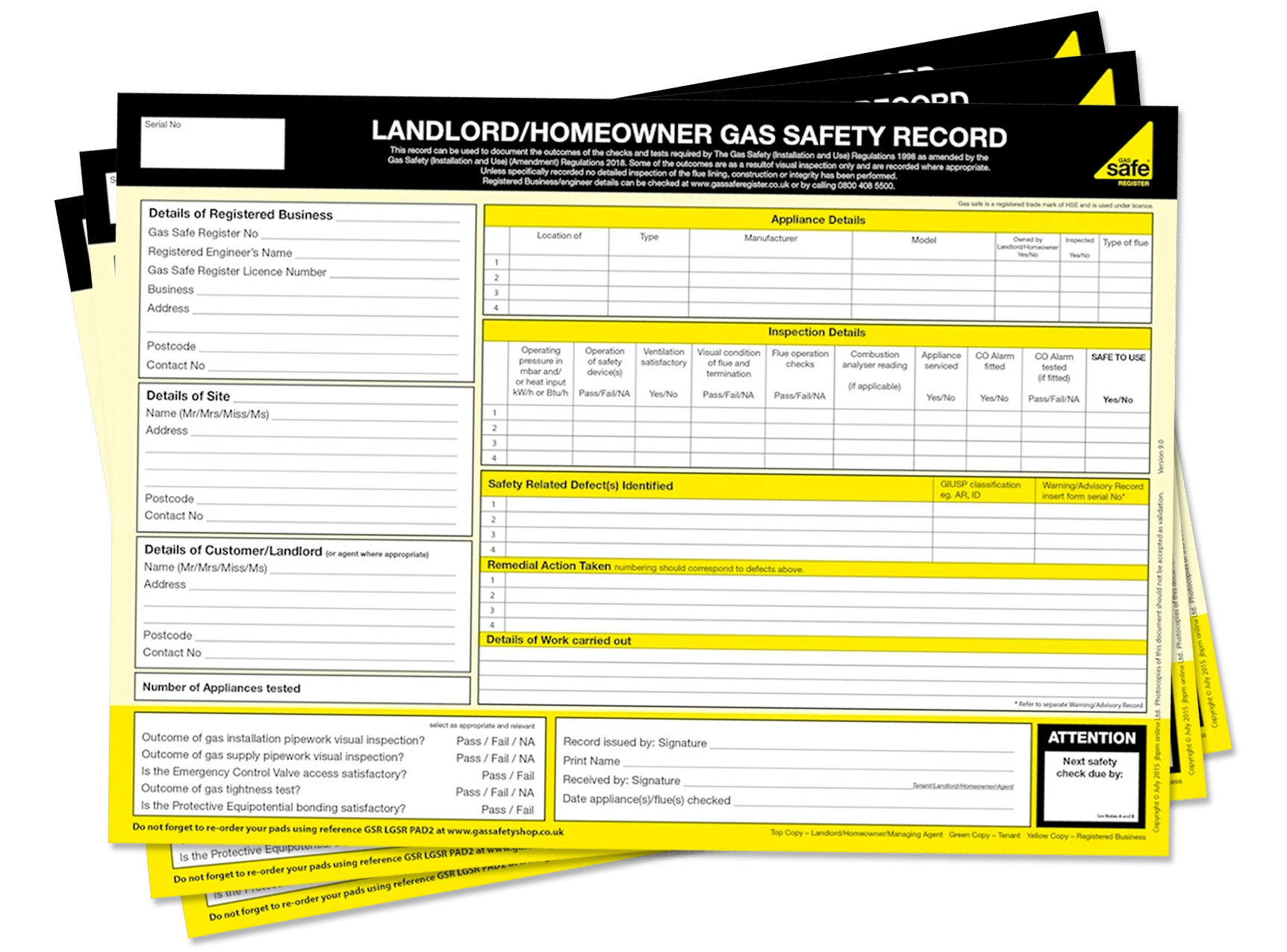
Landlord gas safety checks concern the safety of relevant gas appliances and flues supplied with rented accommodation. In England, landlords generally need these checked by a suitably qualified Gas Safe registered engineer at least every twelve months, alongside duties to maintain them safely. The inspection produces a record of checks and findings, often called a landlord gas safety certificate or CP12. It is not an automatic declaration that every appliance is safe before it has been inspected.
The service is relevant to landlords, letting agents and people managing rented homes with gas equipment. Responsibilities depend on the tenancy and the appliances involved, so provide the property type and supplied appliance list when enquiring. A boiler may not be the only item needing attention: cookers or fires supplied by the landlord can also be relevant. Do not assume a boiler-only appointment covers all gas safety responsibilities at a property.
Existing tenants must generally receive a copy of the gas safety record within twenty-eight days of the check, and new tenants before they move in. These deadlines are landlord responsibilities, not a reason to leave arrangements until the last moment. Access problems, inspection findings and remedial work can affect the process. Plan ahead, keep records and discuss the actual scope with an appropriately qualified Gas Safe registered engineer.
Problems worth addressing before they escalate
A late booking can leave responsibilities unresolved
Waiting until an existing record is about to expire can make access or follow-up work harder to coordinate. A planned inspection may identify defects requiring action rather than simply producing the document expected. Keep a diary of checks, tenancy changes and supplied appliances, and arrange access in advance instead of assuming a last-minute visit will resolve every issue.
A service is not automatically the required record
Boiler maintenance and landlord gas safety inspection have different purposes. Some checks may overlap, but the documents and scope should be confirmed explicitly. Requesting only a boiler service can leave an assumption about the landlord record or other appliances unaddressed. Explain the tenancy and ask which activities are included before authorising the appointment.
Unsafe findings cannot be ignored for a certificate
A safety record documents findings; a safe outcome cannot be guaranteed in advance. If an unsafe condition is identified, follow the engineer's safety instructions and arrange appropriate remedial work. For a gas smell or suspected carbon monoxide, leave the hazardous area and call 0800 111 999. Call 999 for collapse or severe symptoms rather than waiting for an inspection.
From enquiry to completion
Identify the property and appliances
Provide the postcode, property type, tenancy circumstances and landlord-supplied gas appliance list. Include details of the existing record if available and explain whether servicing is also required. The number and type of appliances affect the inspection scope, so a brief that mentions only the boiler may be incomplete.
Arrange lawful access and responsibilities
Coordinate access with occupants or the appointed managing agent and identify who can authorise additional work. Explain any restricted areas or appliance-access problems. The inspection needs an appropriate opportunity to examine the relevant equipment; photographs and old paperwork do not replace access to perform the required checks.
Carry out the relevant safety checks
A Gas Safe registered engineer with the correct appliance competence performs the checks applicable to the inspection. Ask to see the engineer's registration card and relevant categories. The exact scope depends on the appliances and arrangements, and a gas safety visit should not be assumed to inspect unrelated electrical, plumbing or building defects.
Explain findings and any remedial work
The record should reflect what was checked and the findings. Unsafe conditions may require immediate precautions and separately scoped repairs. Discuss the next steps and authorisation for further work; the inspection fee should not be assumed to include all possible parts or remedies. Do not use equipment contrary to safety advice.
Keep and distribute the record
Confirm how you will receive the record and retain it with the property's safety documents. Landlords are responsible for providing copies to tenants within the applicable deadlines and maintaining the relevant equipment safely. Plan the next check and track any follow-up work rather than treating possession of a document as the end of ongoing responsibilities.
What a considered approach gives you
A clearly defined inspection
An appliance list and property brief help establish what needs checking. This makes the appointment more relevant to the landlord's responsibilities and avoids the assumption that one boiler visit necessarily covers every supplied gas appliance or other property-safety obligation.
An actionable record of findings
The safety record identifies the inspection outcome and provides a basis for follow-up. It is useful because it records actual checks, not because it promises a pass in advance. Keep associated repair information so outstanding recommendations are not lost between agents or tenancies.
Better coordination with tenants
Planning access and copy distribution early makes the process easier to manage around occupied homes. It also allows more room to deal with identified problems. A last-minute certificate request should not replace a maintenance and safety-record system that continues throughout the tenancy.
Qualified gas-work oversight
Checking an engineer's current registration and appliance competence is a practical step before authorising gas work. It helps separate the right professional role from general property maintenance. Registration is task-specific and does not imply every other building service or qualification is covered.
Equipment, methods and property considerations
Landlord-supplied appliances and flues
England's landlord duties generally include relevant gas appliances and flues provided with the accommodation, but responsibilities depend on the actual letting arrangement. Provide a full inventory rather than assuming the boiler is the only item. Tenant-owned equipment and complex shared-property arrangements can involve different responsibilities. Use HSE guidance to understand the applicable duties, and discuss uncertainties before arranging a narrowly scoped inspection that may not match the property's needs.
Records, tenancy changes and deadlines
Landlords generally must arrange a safety check at least every twelve months, retain the required records and provide copies to tenants within the applicable timeframes. Existing tenants normally receive a copy within twenty-eight days of the check; new tenants receive one before moving in. These obligations should be planned alongside access and repairs. Do not treat a proposed booking date as proof that the check or tenant-record obligations have already been fulfilled.
Inspection, maintenance and repair are distinct
The gas safety record is not a substitute for maintaining supplied appliances and associated gas equipment safely. Servicing follows appliance maintenance requirements, while repairs address identified problems. Ask for a proposal that distinguishes these activities and any additional charges. Where several properties are managed, a consistent appliance inventory and record system can support organisation, but every property's condition and inspection outcome still need individual attention.
Unsafe conditions and limits of the visit
An inspection can identify conditions requiring precautions or remedial work. Follow the engineer's explanation rather than assuming the certificate request overrides the findings. A landlord gas safety check does not automatically cover electrical safety, plumbing defects, all building regulations or the condition of every household appliance. Commercial premises and unusual tenancy arrangements may require a different scope. Explain these circumstances when enquiring so the work is not incorrectly treated as a routine domestic certificate.
Further technical and safety guidance
Questions before you book
How much is a landlord gas safety check in London or Essex?
The price depends on the property, appliance list, access and any separately requested servicing. Repairs following inspection are not automatically included. Request a clear estimate that identifies which appliances and activities are covered, how additional work is authorised and how the inspection record will be supplied.
How often is the landlord gas safety check needed?
In England, relevant landlord-supplied gas appliances and flues generally require checks at least every twelve months by a suitably qualified Gas Safe registered engineer. Responsibilities depend on the accommodation and arrangement. Review HSE guidance and plan access early; an appointment request does not itself fulfil the inspection duty.
When must tenants receive the record?
Existing tenants generally need a copy within twenty-eight days of the check, and new tenants before moving in. The landlord remains responsible for meeting the applicable requirements. Confirm receipt and distribution arrangements, retain the required records and track any remedial work separately from the copy-supply deadline.
Is a CP12 the same as boiler servicing?
No. CP12 is a commonly used name for the landlord gas safety record, while servicing concerns appliance maintenance. Some tasks can overlap but should be agreed explicitly. If you need both, say so when enquiring and check which appliances, records and additional work are included.
Will I definitely receive a passing certificate?
A safe result cannot be promised before inspection. The record documents the checks and findings, including defects where relevant. Unsafe conditions may require precautions and repair. Do not treat payment for an inspection as payment for a predetermined pass; safety advice must be followed regardless of the intended tenancy schedule.
How long does the inspection and record take?
Timing depends on the number of appliances, access and findings. Ask about the appointment and record-delivery arrangements when booking. Additional repairs may need separate authorisation or visits. Same-day issue or completion is not guaranteed on this page, particularly when access or safety problems need resolution.
Does the record guarantee safety for the following year?
No. A record describes the inspection findings at the time; it is not a guarantee against future faults. Landlords also have maintenance duties, and defects reported later need attention. Product lifespan and warranty questions should be addressed through the appliance documents and appropriate servicing, not inferred from the gas safety record.
Can I book an emergency Sunday check?
We are open Monday to Saturday, 7am–6pm, and closed Sundays. Contact us during opening hours to discuss inspection availability. If there is a gas escape or suspected carbon monoxide, use the Gas Emergency Service on 0800 111 999 immediately; call 999 for collapse or severe symptoms.
Arrange the right landlord gas safety checks
Send the postcode, appliance list and access details. Request a free estimate with a clear inspection scope and explain whether you also need maintenance or repair work.
Established 2012 · Monday to Saturday, 7am – 6pm (closed Sundays)