
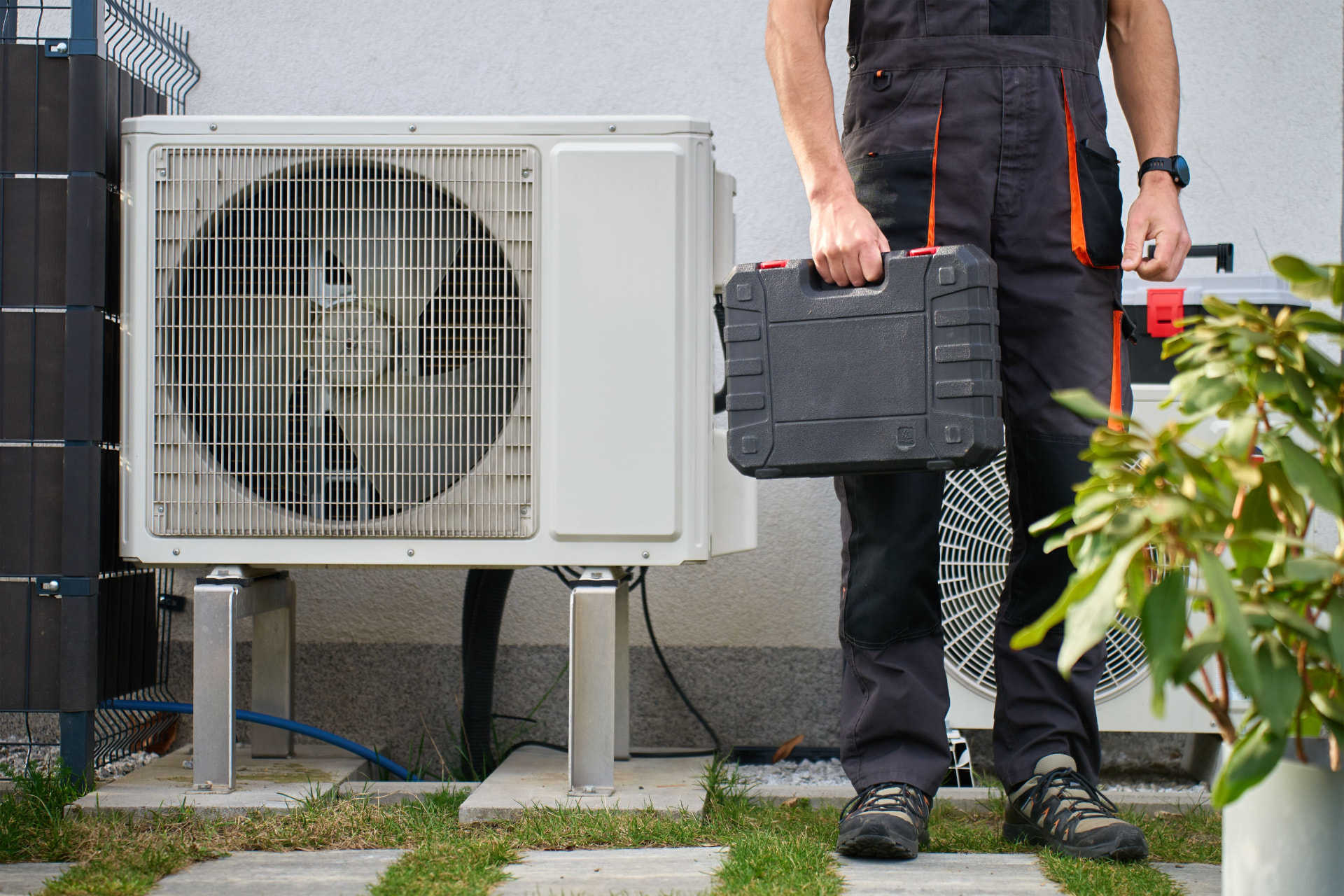
Heat Pump Servicing
& Repair
in London & Essex
Arrange maintenance for an existing heat pump or get a clear next step when heating or hot water is unreliable. Share the equipment details, symptoms and service history so assessment starts with your system rather than a guessed replacement part.
Since 2012
Established local firm
7am – 6pm
Mon–Sat · Closed Sundays
Checkatrade
Read our profile and reviews
What the service involves
Heat pump servicing is planned inspection and maintenance based on the manufacturer's requirements for the particular equipment. Repair is investigation and correction of an identified fault. They are related but not interchangeable: a system already showing an alarm or failing to heat should be described as a fault enquiry, even if routine maintenance is also due. Confirm whether the proposed appointment includes servicing, diagnosis or both before assuming one standard visit will cover every issue.
An air-to-water heat pump works with emitters, circulating water, controls and often a hot-water cylinder. Poor comfort can originate outside the outdoor unit, while a control setting can resemble an appliance failure. Useful assessment considers the reported symptoms in that wider context. Give the manufacturer and model, whether heating and hot water are both affected, and any recent changes to radiators, schedules or household use. An electricity bill alone cannot establish which component, if any, needs repair.
Maintenance and repair requirements vary between monobloc and split arrangements, refrigerants and manufacturers. Electrical and refrigerant work may require specialist qualifications relevant to the task. Gas Safe registration covers gas work and does not establish heat pump or refrigerant competence. Check the relevant evidence and any existing manufacturer warranty route before authorising work. The service described here does not imply a particular accreditation, approved-brand status or authority to undertake every specialist task on every heat pump model.
Problems worth addressing before they escalate
An alarm needs context, not repeated resets
A controller code identifies information for investigation rather than proving a universal cause. Record the exact code, time and what the system was doing, then follow the manufacturer's safe user instructions. Repeatedly resetting the unit can obscure the sequence leading to the fault. Do not open panels, bypass protective controls or attempt electrical or refrigerant work to keep the system running. An immediate safety hazard requires appropriate assistance rather than waiting for a routine service.
Cold rooms may point beyond the appliance
Insufficient radiator output, restricted circulation, unsuitable schedules or building heat loss can affect comfort even when the heat pump is operating. Note which rooms struggle and whether the problem occurs only in colder weather. Tell us about recent alterations and whether the issue has existed since installation. Replacing the outdoor unit or raising settings without understanding the cause may leave the distribution or design limitation unchanged.
Neglected access makes care more difficult
Blocked maintenance space, concealed valves or missing equipment records can complicate servicing and fault assessment. Keep the surrounding area accessible without removing protective parts or disturbing the unit. Follow the user manual for permitted checks and cleaning; aggressive cleaning methods or chemicals can damage equipment. If the installation is under warranty, establish the manufacturer's conditions and approval route before paying for an intervention that might need separate authorisation.
From enquiry to completion
Describe the equipment and the reason for booking
Send your postcode, manufacturer, model, installation date if known and a description of the issue. For planned maintenance, mention the last service and any concerns noticed since then. For a fault, provide controller codes and explain whether heating, hot water or both are affected. Accessible photographs of displays and equipment labels can help without requiring you to touch internal components.
Check records, scope and specialist requirements
Locate the user manual, commissioning details and applicable warranty paperwork. Ask whether the proposed work is within the provider's competence for the specific model and whether specialist electrical or refrigerant tasks might be required. Confirm any manufacturer authorisation and building-management permissions. A maintenance booking should not silently become a broader repair or redesign without its boundaries being explained.
Assess the fault or maintenance needs
The relevant checks depend on the equipment and reported behaviour. Assessment may need to consider controls, water circulation, emitters, cylinder operation and the heat pump itself. Service work follows manufacturer guidance rather than a generic checklist taken from a gas boiler. If findings indicate a wider design or distribution problem, ask how it differs from a component repair and what further investigation is needed.
Agree any repair before additional work proceeds
Discuss the findings, proposed parts, access and costs before authorising additional work. Some faults need further testing or components that are not immediately available. Confirm what the initial appointment covers and whether a return visit is necessary. A service does not automatically include every part replacement, and an estimate does not guarantee that the first suspected cause will be the only issue found.
Check operation and retain the findings
After servicing or repair, ask which checks were relevant, what settings changed and whether any limitations or follow-up remain. Keep a record with the equipment documents and confirm the manufacturer's next maintenance requirements. Understand which user controls you can adjust and which settings need professional handling. Testing at completion is not a promise against future breakdowns or a guarantee of a particular seasonal efficiency.
What a considered approach gives you
Maintenance specific to the product
Following the actual manufacturer requirements gives planned care a meaningful basis. It helps you distinguish permitted owner upkeep from professional inspection and identify the records needed for any applicable warranty. It does not create a universal maintenance interval or make every future warranty claim automatically valid.
A better-informed repair decision
An explanation of the findings lets you compare the proposed remedy with the symptoms you reported. You can ask why a component needs replacement, whether the wider circuit is involved and what remains uncertain. This is more useful than relying on an online code list as a complete diagnosis.
Controls and circulation considered together
Reviewing the connected system helps separate an equipment fault from schedules, water flow or emitter limitations. It gives the next step a clearer purpose and avoids assuming that an outdoor-unit repair will address every cold room. The necessary scope still depends on inspection and the system design.
Useful records for ongoing ownership
Service findings, equipment details and any confirmed settings provide context for later visits. Retain original commissioning and warranty information as well as repair records. Clear documentation helps an assessor understand what has changed without implying that a maintenance visit certifies every aspect of the original installation.
Equipment, methods and property considerations
Routine maintenance and safe owner checks
Manufacturers specify different maintenance requirements for their products and installation arrangements. Consult the manual for any permitted cleaning, observation or controller checks and arrange professional maintenance as instructed. Keep safe access available and report visible damage, leakage or unusual sounds without dismantling equipment. Outdoor airflow and maintenance clearances can matter, but do not move or modify the unit yourself. A gas-boiler servicing checklist is not a substitute for the requirements of a particular heat pump.
Water-side faults and hot-water behaviour
Circulation restrictions, pressure changes, control settings and cylinder arrangements can affect heating and hot water. Report whether the problem is constant or intermittent, whether particular radiators are affected and whether hot-water demand changes the behaviour. Some issues may involve the distribution circuit rather than the refrigerant equipment. The assessor should explain the relevant boundaries and any further checks required. Do not assume every pressure change is corrected by topping up or that a cold radiator proves system cleaning is needed.
Defrost operation, noise and performance
Air source heat pumps can enter defrost operation under suitable conditions; visible vapour or a change in sound is not by itself evidence of failure. Equally, persistent unusual behaviour should not be dismissed without reference to the product and operating conditions. Record when it occurs, the outdoor conditions and any associated controller messages. Efficiency depends on the building, temperatures, tariffs and use. A maintenance visit cannot promise a fixed reduction in electricity bills or assess seasonal performance from one short operating period.
Refrigerant, electrical work and warranty routes
The qualifications and procedures for specialist work depend on the equipment, refrigerant and task. Check appropriate personnel and company requirements where regulated refrigerant work is involved, and use suitably qualified handling for electrical work. No MCS status, F-gas certification or manufacturer-approved repair relationship is asserted here without evidence. A manufacturer warranty may direct you to a particular support process or require authorisation. Confirm that route before arranging paid work and ask for the actual product and workmanship terms rather than assuming a blanket guarantee.
Further technical and safety guidance
Questions before you book
How often should my heat pump be serviced?
Follow the manufacturer's instructions and the conditions of any applicable warranty. Requirements can vary by equipment and arrangement, so one universal interval is not specified here. Keep the manual and service record available and ask what planned care is appropriate for your system and who is qualified to perform the relevant tasks.
Is servicing the same as repairing a fault?
No. Planned servicing follows maintenance requirements; repair investigates and addresses a reported problem. Tell us about any active alarm, loss of heating or unstable hot water when enquiring. Confirm whether the appointment is maintenance, diagnosis or a combination and how any additional parts or work will be agreed.
What does heat pump servicing or repair cost?
The equipment, required checks, symptoms, parts and access affect the cost. Ask what the initial appointment includes and how further diagnosis or a return visit is charged and authorised. There is no reliable single repair price based only on a controller code or the size of the outdoor unit.
Can a heat pump fault be fixed on the first visit?
That depends on identifying the cause, equipment support and suitable parts. Some problems need additional testing, specialist work or changes outside the appliance. Supply the model, fault history and available records before booking. Immediate attendance and first-visit completion are not guaranteed by this page.
What should I do when a fault code appears?
Record the code and symptoms and consult the safe user guidance for your equipment. Avoid repeated resets without instructions, opening panels or adjusting protected installer settings. If there is an immediate electrical or other safety hazard, keep clear and obtain appropriate help rather than treating it as an ordinary maintenance enquiry.
Why are my radiators cool while the heat pump runs?
Heat pumps may operate with lower water temperatures than a conventional boiler, but uncomfortable rooms can also have circulation, control, emitter or heat-loss issues. The pattern needs assessment. Explain which rooms are affected, when it happens and whether it is a recent change instead of assuming the outdoor unit has failed.
Will maintenance protect my warranty or reduce bills?
Following the actual maintenance requirements can be relevant to warranty conditions, but it does not guarantee claim approval or a specific bill reduction. Check the product terms, registration and authorised-support route. Running costs depend on the whole system and how it is used; no universal saving or trouble-free lifespan is promised.
Can I book heat pump repair on Sundays?
Our stated hours are Monday to Saturday, 7am–6pm, and Sundays are closed. Contact us during those hours to discuss the equipment and appointment availability. This service does not promise round-the-clock attendance or same-day repair. For an immediate safety hazard, use the appropriate emergency assistance.
Get a clear next step for your existing heat pump
Send your postcode, model, symptoms and service history. Request a free estimate for planned maintenance or fault assessment, with the scope and availability confirmed before booking.
Established 2012 · Monday to Saturday, 7am – 6pm (closed Sundays)